Darwin and Surrounds
Overview
Situated on the very edge of the Northern Territory, Darwin and Palmerston cities and their surrounds is home to friendliest and most culturally diverse areas in Australia.
Darwin is the state capital city of Northern Territory. Darwin has an estimated population of over 150,000 people, which accounts for 0.60% of Australia population. Darwin is the least populated capital city in Australia. The size of Darwin is 3,163.9 km². Over half of Northern Territory population lives in Darwin.Palmerston is the second largest city in the NT and is known as Darwin’s ‘satellite’ city, while Litchfield is more widespread across a larger geographical area. Approximately 26% of the NT population, an estimated 63,427 people, reside in this combined region.
Darwin, Palmerston and Litchfield offer employment opportunities across several government and private enterprise industries including tourism, horticulture, forestry and education. Darwin is home to the Robertson, Larrakeyah and Coonawarra Defence Barracks and the RAAF base, a large employer across the region.
As the gatekeeper to some of the world’s largest mineral deposits, this region is a leader in mining, mining equipment technology and services, renewable energy, and oil and gas infrastructure. The Northern Territory’s vast outback and tropical areas have supported expertise in remote-area health services and tropical medicine.
Darwin has an excellent reputation for healthcare including the specific fields of Indigenous, rural and remote delivery, tropical research and emergency response. The city is home to the National Critical Care & Trauma Response Centre (NCCTRC), which forms a key element of the Australian Government’s disaster and medical response to incidents of international significance. While the Royal Flying Doctor Service (RFDS) and Menzies School of Health Research undertake important work in tropical, Indigenous and remote health.
Darwin is the best place in Australia for graduates to find employment with 71.8% of undergraduates living in Darwin gaining full-time employment four months after completing their degree.
For information on regional development visit Strengthening the regions | Department of the Chief Minister and Cabinet.
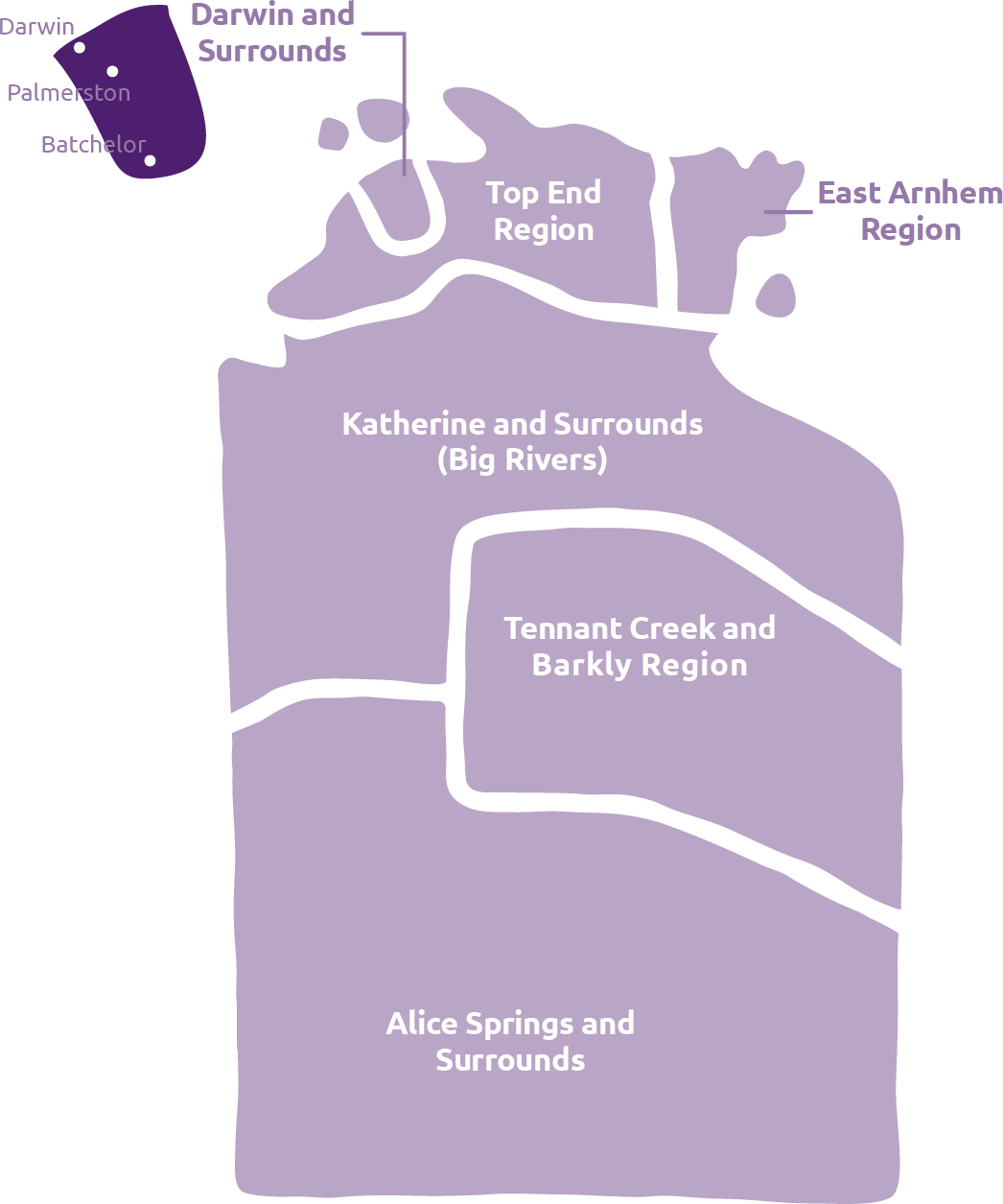
Darwin, Palmerston and surrounds
The Larrakia people are the traditional owners of the Darwin Region, from Cox Peninsular in the West, to Gunn Point in the North, Adelaide River in the East and down to the Manton Dam towards the South. The Larrakia people have a deep, spiritual connection with the land and sea, within the Top End. Unspoiled national parks and breathtaking waterfalls, the Top End is home to some of the Northern Territory’s most stunning landscapes.
A tropical oasis, the region is renowned for its tropical weather, spectacular sunsets, great fishing spots, and laid-back lifestyle, and includes unique Australian landmarks such as the World Heritage-listed Litchfield National Park.
You can spend the afternoon at Casuarina Square or Gateway Shopping Centres, spend your Sunday at the Mindil Beach Markets or watch the sunset from Cullen Bay. If you want to get out of town, take the family to one of the many iconic national parks and swimming holes such as Howard Springs Nature Park or Berry Springs.
Palmerston is located just 22 kilometres from the centre of Darwin and has a population of around 37,000. Palmerston is the site of the Australian Army’s Robertson Barracks, purpose built for the First Brigade and First Aviation Regiment.
There are several shopping centres at Palmerston and a pleasant 18 hole golf course. Another popular attraction is Marlow Lagoon, a picturesque lake and park with playground, also offering an area for off-leash dog walking.
The Palmerston Markets are very popular with locals during the dry season. Located in the heart of Palmerston’s CBD, the markets offer a variety of foods from different cultures as well as entertainment for the entire family.
If you are looking to cool off the Palmerston Water Park is close to the Palmerston town centre. Facilities include a water slide, wet play area, wading pools, skate park and shaded picnic areas with barbecues.
Only a 60-minute drive south of Darwin, Litchfield National Park is possibly the Northern Territory’s bestkept secret. The park is filled with stunning waterfalls and waterholes that are surrounded by monsoonal vine forests – all of which offer a cool respite on warm summer days. A drive through Litchfield is full of contrasts and some of the most enormous termite mounds in the Top End. Cabin, camping and caravan sites are within a short drive of the park gates.
Liveability
This region has a culturally diverse Aboriginal population, consisting of a number of Aboriginal communities and language groups that are situated along some of the most picturesque coast lines, inland waterways and escarpment country. The region also boasts a rich history of multiculturalism which is shaped by Aboriginal people, newly arrived migrants from all parts of the world, as well as established multicultural communities. Local communities are welcoming, vibrant and inclusive enabling individuals and groups to achieve their potential and the City to prosper as a centre of culture, creativity and learning.
Darwin has a range of home options to suit your lifestyle. Homes are designed with outdoor living in mind - from spacious inner-city apartments with balconies to sprawling acreage properties with large outdoor entertaining areas.




A wide variety of childcare and educational choices are available across Darwin and the Top End remote areas ranging from public government provided schools to private Catholic, Lutheran and independent nondenominational colleges. The standard curriculum program is free for all students enrolled in government schools. Charles Darwin University provides an extensive range of higher education and vocational education and training options available both on campus and online.
This region is known for its tropical climate and unlike the rest of Australia, it only has 2 seasons - the Dry and the Wet. During the Dry season, residents enjoy blue skies, and average of sunny 32o days and 20o nights. The humidity drops to a comfortable 60-65%, making it the perfect condition for outdoor living. The Wet season generally starts in November/December and usually ends in April. Temperatures will reach the mid-30o and an increase in humidity, brings refreshing monsoonal rains and spectacular storms.
For more information on working and living in the Northern Territory visit The Territory, Australia.
View job vacancies in the Darwin and Surrounds regionOur Regions & Cities
-

- Promote local employment to your region, community or member organisation with a uWorkin Talent Community. Find out more.